
See how connected planning helps distributors balance service, capacity, costs, and operational efficiency.
Foodservice and beverage distributors operate in one of the most complex areas of logistics. Every day, planning teams balance customer expectations, delivery schedules, driver availability, vehicle capacity, product requirements, and cost pressures while responding to changing conditions across the network.
The challenge is not simply moving products from warehouse to customer. It is making thousands of connected decisions that determine how efficiently deliveries are made, how consistently customers are served, and how well resources are used. As distribution networks become more dynamic, many organizations are moving beyond manual planning and disconnected systems. They are using data, automation, and AI-powered logistics solutions to support better decisions before, during, and after daily operations.
ORTEC helps distributors connect these planning decisions by applying advanced optimization, AI, and operational data across routing, loading, delivery execution, and continuous improvement.
Why traditional distribution planning is under pressure
For decades, many distribution operations relied on relatively stable demand, established delivery territories, and predictable routes. That environment has changed. Fluctuating order volumes, labor constraints, higher transportation costs, customer expectations, and more frequent disruptions are putting added pressure on foodservice and beverage delivery networks.
A route that worked well six months ago may no longer be the most efficient option today. Delivery frequencies, customer demand, service requirements, and operating costs can all shift over time. Better performance starts by treating distribution planning as a connected process rather than a series of isolated decisions.
The decisions that shape distribution performance
Many operational results are shaped long before a truck leaves the warehouse. Territory planning influences route efficiency, driver workloads, service consistency, and costs. Well-designed territories help balance demand and reduce unnecessary travel, while outdated territory structures can create inefficiencies that carry through daily execution. With ORTEC, distributors can model territory scenarios, evaluate service rules, and adjust planning structures as demand patterns shift.
Delivery frequency is another important lever. More frequent deliveries do not always produce better outcomes, especially when demand patterns, customer requirements, and route density change. Many distributors periodically evaluate whether customer needs can be met through fewer trips, better scheduling, or stronger consolidation strategies. ORTEC supports service frequency engineering by helping planners evaluate delivery patterns, consolidation opportunities, and customer service requirements together.
Route optimization remains one of the most visible ways to improve distribution performance. Effective routing considers delivery windows, vehicle capacity, customer priorities, driver availability, traffic conditions, product handling requirements, and service commitments. Modern routing technology can evaluate thousands of scenarios to help planners create routes that are both efficient and realistic.
Load planning is equally important. Vehicles must be loaded in a way that supports safe handling, efficient unloading, and route execution. Foodservice distributors often manage multiple temperature zones and a broad SKU mix. Beverage distributors may need to account for pallet sequencing, product weight distribution, merchandising requirements, and delivery accessibility. ORTEC’s integrated routing and loading capabilities bring these decisions into a connected workflow, helping teams improve load quality, route feasibility, and fleet utilization without adding unnecessary manual work.
Moving from reactive planning to AI-powered logistics
Many distribution teams spend much of their day responding to exceptions. Orders change, drivers call out, traffic delays occur, and delivery requirements shift. By the time planners adjust one issue, another may already be emerging.
AI-powered logistics helps organizations move beyond simple reaction. Advanced optimization technologies can evaluate large numbers of variables at once, supporting decisions across demand forecasting, capacity planning, delivery frequency analysis, dynamic route optimization, resource allocation, service-level improvements, and ongoing network improvement.
Importantly, AI does not replace planners. It helps planners compare options more quickly, understand tradeoffs more clearly, and adapt more effectively when conditions change. ORTEC applies AI and advanced optimization as practical decision-support technology, helping teams manage exceptions and make data-driven decisions while keeping human oversight in the process.
Connecting planning and execution
One of the biggest opportunities in foodservice and beverage distribution is improving the connection between planning and execution. Historically, strategic planning, route planning, dispatch, delivery execution, and performance analysis have often been managed through separate processes and systems. When these activities are connected, organizations gain greater visibility and control across the operation.
An integrated approach helps teams build realistic delivery plans, monitor execution in real time, respond to exceptions, improve customer communication, capture performance data, and refine operations over time. ORTEC supports this connected workflow through daily routing, control tower visibility, real-time monitoring, track and trace, and performance analytics, giving teams a clearer view of what is planned, what is happening, and where improvement is needed.
Using real-time data for continuous improvement
Distribution planning should not end when routes are dispatched. Real-time operational data allows planners and dispatchers to monitor route progress, delivery status, driver activity, customer ETAs, service exceptions, and capacity utilization throughout the day. Internally, this visibility helps teams identify potential issues early. Externally, it supports more accurate delivery communication and a stronger customer experience.
The same data also supports longer-term improvement. High-performing distribution organizations regularly evaluate whether territories still match demand, delivery frequencies reflect current needs, vehicles are being used effectively, routes consistently experience delays, and planners are spending time on the right work. ORTEC helps distributors analyze cost-to-serve, route adherence, capacity utilization, planner effort, and planned-versus-actual performance, so incremental improvements can compound over time.
Preparing for the future of foodservice and beverage distribution
Distribution operations will continue to become more dynamic. Customer expectations are rising, labor remains constrained, sustainability goals are gaining importance, and organizations need more flexibility to respond to changing demand and operating conditions. The future of foodservice distribution, beverage distribution, and last-mile logistics will depend on more connected planning processes, stronger visibility, and broader use of AI-powered logistics technologies.
The goal is not simply to automate decisions. It is to help transportation, routing, and operations teams make better decisions with greater speed and confidence. Organizations that connect routing, loading, delivery frequency, territory design, resource allocation, and execution are better positioned to improve efficiency, increase service levels, and adapt to changing market conditions.
ORTEC helps foodservice and beverage distributors bring routing, loading, visibility, and planning together, so teams can make better decisions with greater speed and confidence and make work flow across the distribution network.
See how ORTEC can support your distribution operation
Ready to improve routing, loading, visibility, and planning across your foodservice or beverage distribution network?
Request a demo or connect with ORTEC to discuss how AI-powered logistics can help your team make better decisions with greater speed and confidence.
Real-world results
Case studies
See how retailers are putting these strategies into practice and achieving measurable operational results.
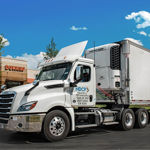
National DCP: Supporting a scalable national supply chain
Accelerating digital transformation and operational savings at a $3 billion supply chain management company

Brau Union Austria: Optimizing route planning for beer logistics
Discover how this distributor standardizes and runs deliveries efficiently with advanced route planning
For more information
Additional resources
ORTEC helps foodservice distribution organizations apply AI-powered decision intelligence to real-world transportation and logistics challenges
Food and beverage distribution: A practical guide to stronger, more efficient delivery operations
Explore the fundamentals, challenges, and strategies shaping modern foodservice and beverage distribution
Increasing route productivity across beverage and food service distribution
Discover practical ways to improve route efficiency, fleet utilization, and last-mile delivery performance.
Real-time visibility for food and beverage distribution and last-mile logistics
Gain greater control of deliveries with real-time visibility, proactive communication, and exception management
Key trends reshaping foodservice and beverage distribution
Examine the forces influencing distribution, from AI-powered logistics to sustainability and workforce challenges
What can ORTEC help me do?
ORTEC for foodservice and beverage distribution
ORTEC helps foodservice distribution organizations apply AI-powered decision intelligence to real-world transportation and logistics challenges
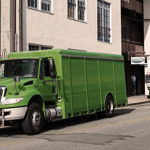
Retail and wholesale distribution solutions
Connect planning, routing, loading, and execution across your distribution operation to improve service and efficiency
Intercompany Distribution
Optimize inventory movements and replenishment plans across production and distribution networks.